Design and Develop an Economical Axial Flux Permanent Magnet Generator and Investigating Its Application in Renewable Energy Sector

Compact. Efficient. Renewable Solutions.

Why Axial Flux?

Axial flux technology represents a major advancement in electric motor and generator design, offering superior performance in compact, lightweight configurations. Unlike traditional radial flux machines, where magnetic flux flows perpendicularly to the rotor axis, axial flux motors and generators channel magnetic flux parallel to the axis of rotation.
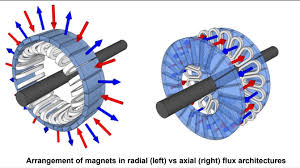
Technology

This configuration significantly reduces core and copper losses, resulting in higher efficiency—often exceeding 95%—and greater torque density, reaching over 15 Nm/kg. These characteristics make axial flux machines ideal for applications where space, weight, and efficiency are critical.
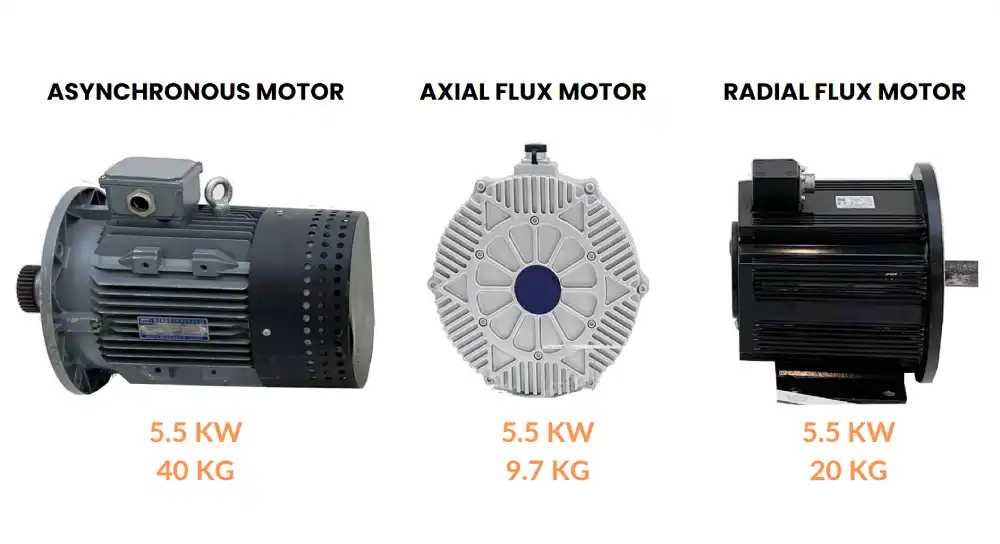
Weight

Used across electric vehicles, renewable energy systems, aerospace, and human-powered devices, axial flux machines are favored for their flat, pancake-like form factor, enabling easier integration and cooling. Power outputs range from small-scale 100 W units to industrial-grade machines delivering over 500 kW. Dual-rotor, single-stator configurations further enhance magnetic coupling and reduce cogging torque.

In renewable energy, axial flux generators allow direct-drive wind turbines to operate without bulky gearboxes, improving reliability and reducing maintenance. In mobility and fitness, their low-speed, high-torque capabilities allow efficient energy capture from human or regenerative motion.

As demand grows for efficient, sustainable technologies, axial flux designs stand out by combining mechanical simplicity with cutting-edge electromagnetic performance.
Applications

Windmill

Renewable Energy Generation

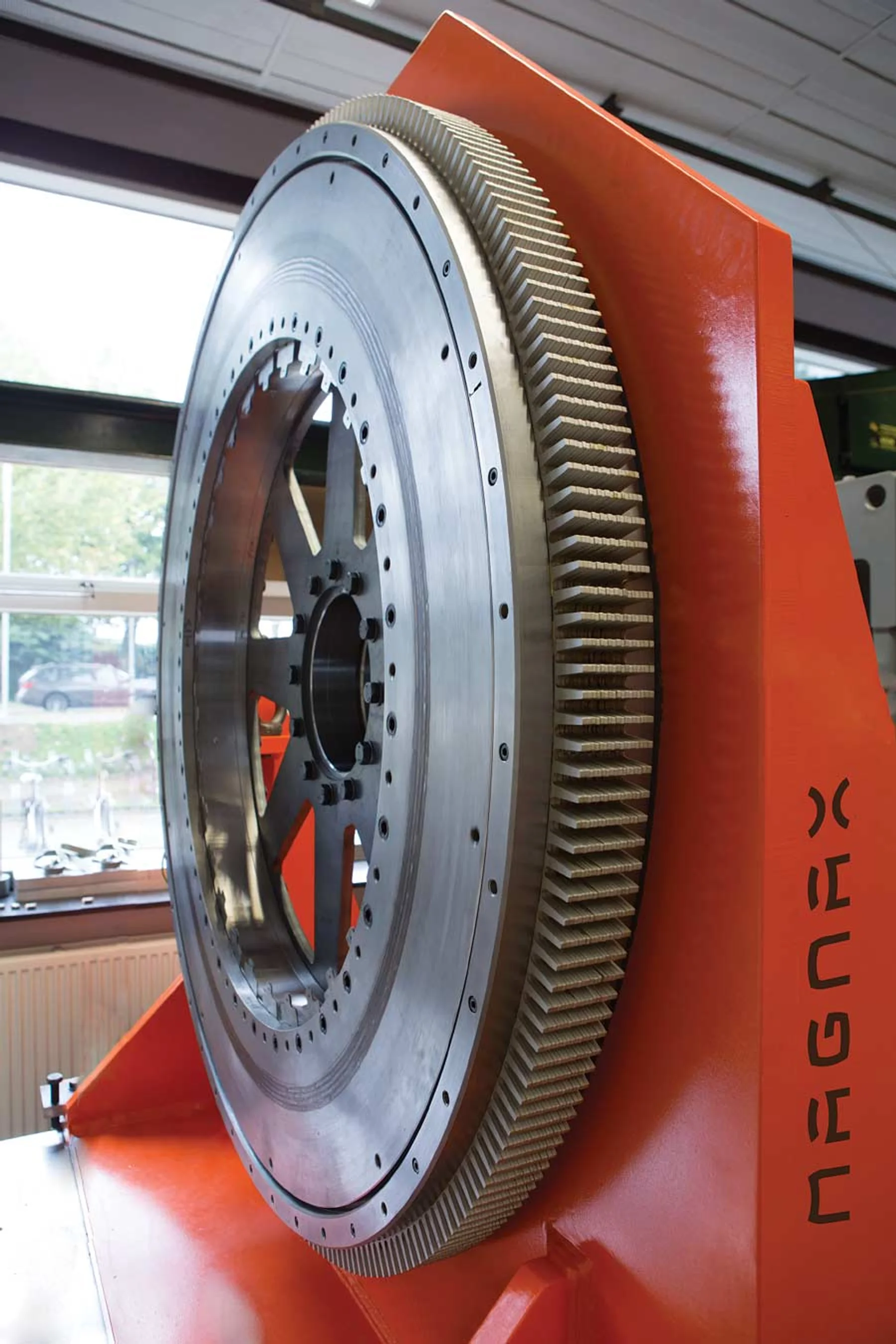
Axial flux technology is transforming renewable energy generation with its high efficiency, compactness, and low maintenance, making it ideal for wind turbines, micro-hydro systems, and human-powered generators. Compared to radial machines, axial flux generators offer shorter magnetic paths and higher power densities, improving energy conversion at lower RPMs. Companies like Emrax and Magnax produce axial flux generators rated from 1 kW to over 500 kW, with efficiencies exceeding 94%, ideal for direct-drive wind turbines that eliminate gearbox losses. Their flat geometry reduces nacelle weight and improves scalability for vertical and horizontal axis turbines. In off-grid and remote applications, axial flux designs enable portable, low-speed energy harvesters used in small-scale hydro, tidal systems, and human-powered devices like bicycle generators. The simplified construction, with air-gap winding and dual-rotor configurations, boosts cooling and minimizes energy loss, maximizing sustainability. Axial flux generators are enabling the next generation of decentralized, efficient, and resilient renewable power systems.

Fitness Machines

Fitness Machines

Axial flux technology enables the development of innovative fitness machines that convert human motion into clean, usable energy. Its high torque at low RPM and compact, flat design make it perfect for integrating into exercise bikes, ellipticals, and pedal desks. These systems can efficiently generate 100–500W, powering lights, charging devices, or storing energy in batteries. By combining axial flux generators with smart controllers, real-time monitoring, and IoT connectivity, users can track energy output, set fitness-energy goals, and promote sustainable habits, transforming workouts into renewable energy solutions.

EV Scooter

Regenerative Braking, EVs and Marine Applications

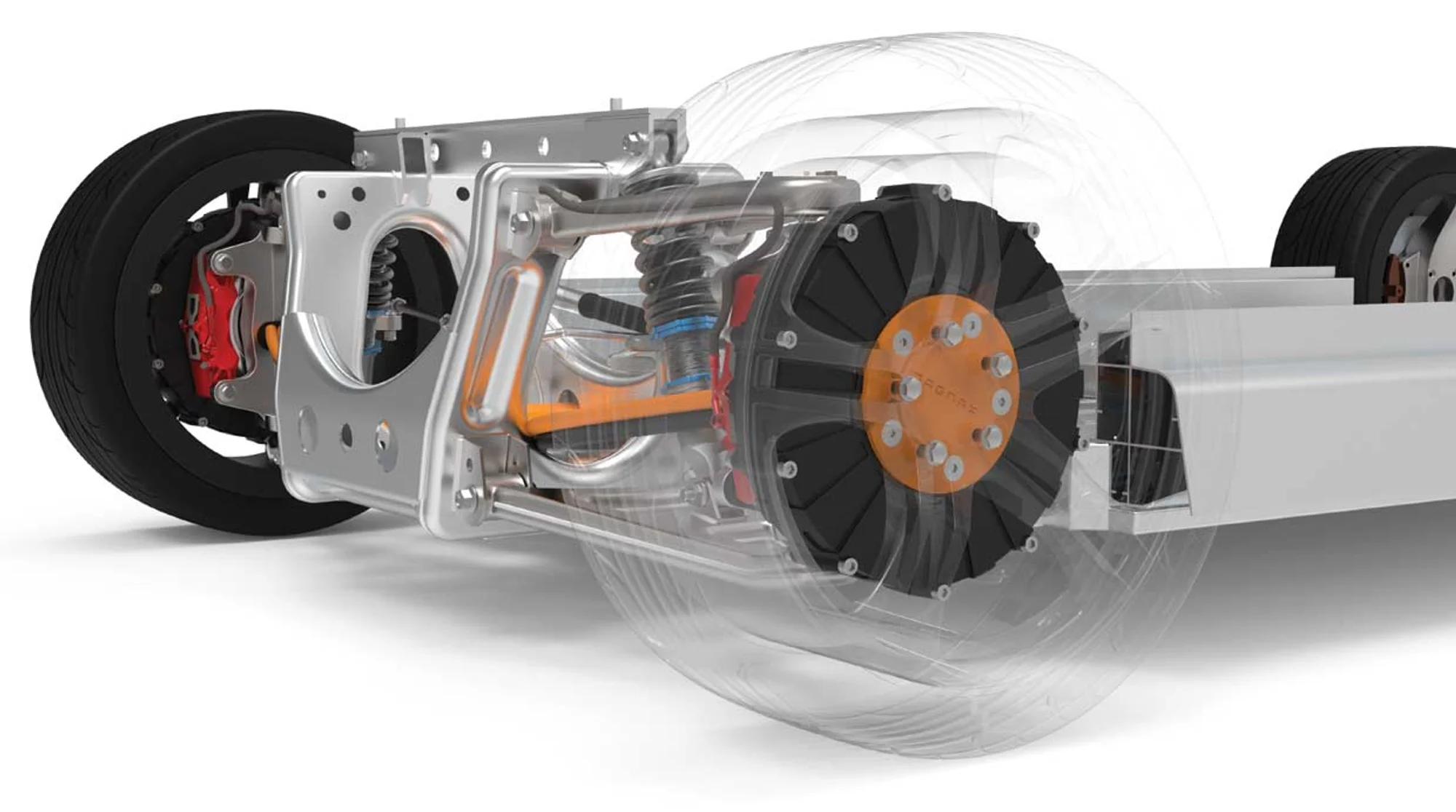
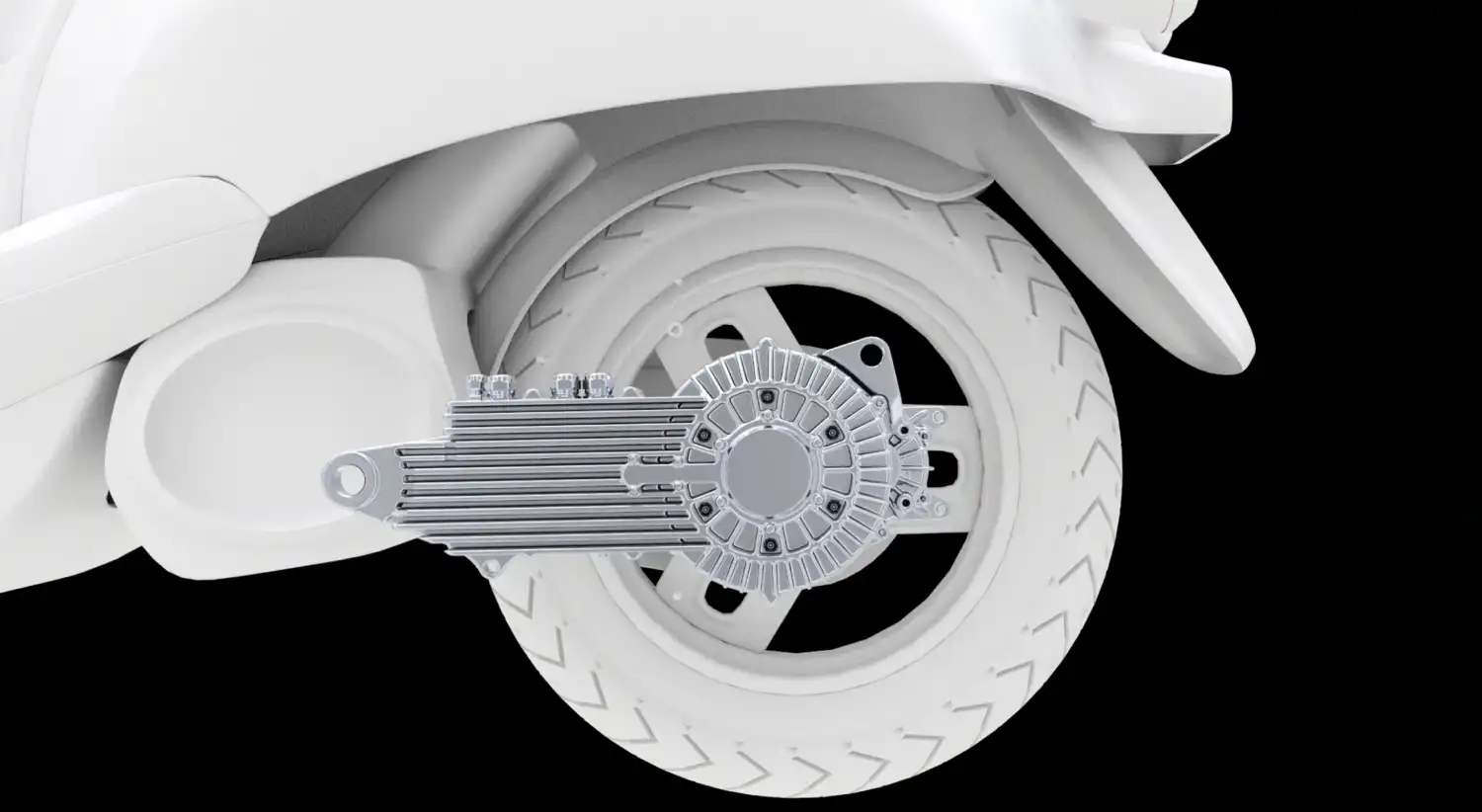
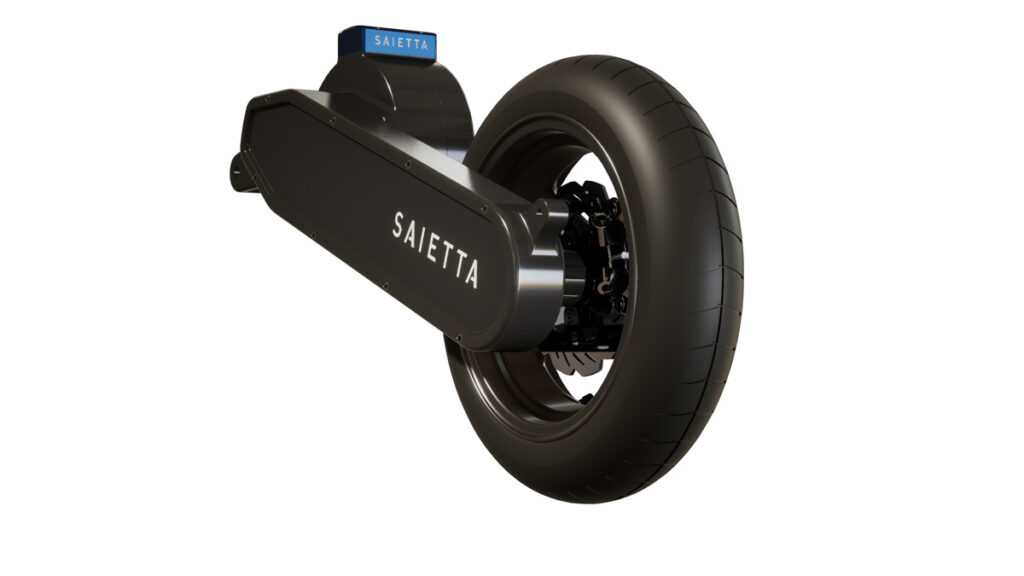
Axial flux technology revolutionizes electric mobility with its compact design, high torque density, and exceptional efficiency, making it ideal for regenerative braking, EVs, and marine propulsion. Unlike radial flux motors, axial flux machines shorten magnetic paths and reduce copper losses, achieving efficiencies over 96%. In EVs, companies like YASA (used in Mercedes-AMG EQS) and Magnax provide motors with outputs of 100–300 kW, torque densities above 15 Nm/kg, and significant weight savings. These features enhance braking energy recovery and vehicle range. In marine applications, axial flux motors reduce hull space usage while maintaining high thrust-to-weight ratios, vital for electric ferries and submersibles. Their flat, pancake shape supports easy integration and cooling. Regenerative braking systems benefit from the rapid dynamic response and high back-EMF capability of axial flux motors, allowing more efficient energy capture during deceleration. As the demand for compact, sustainable propulsion grows, axial flux designs are driving performance improvements across sectors.

The Project

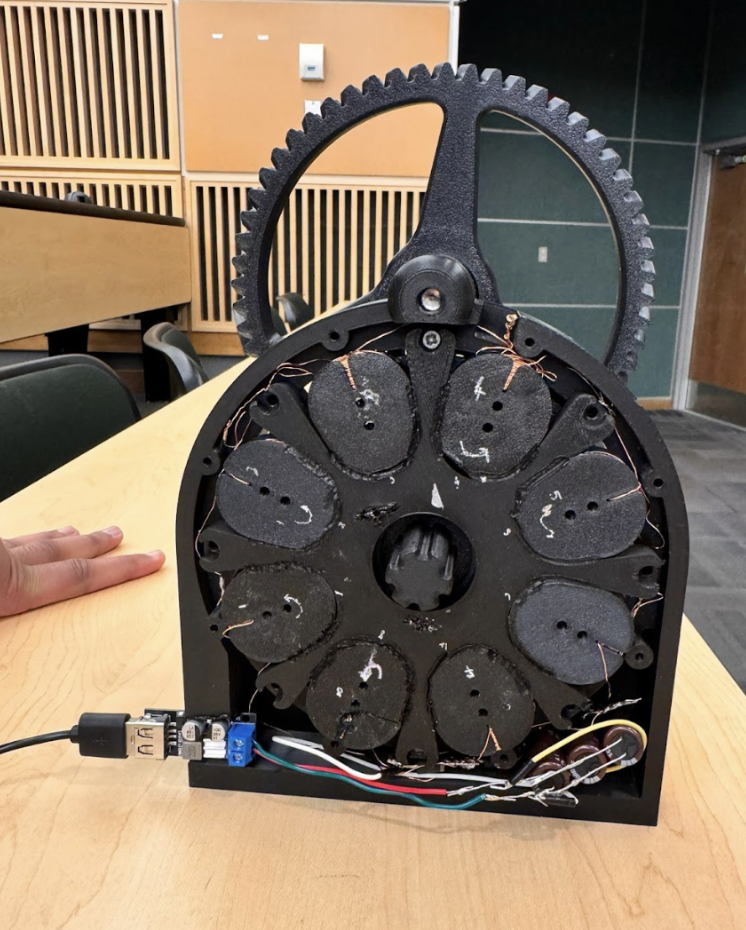
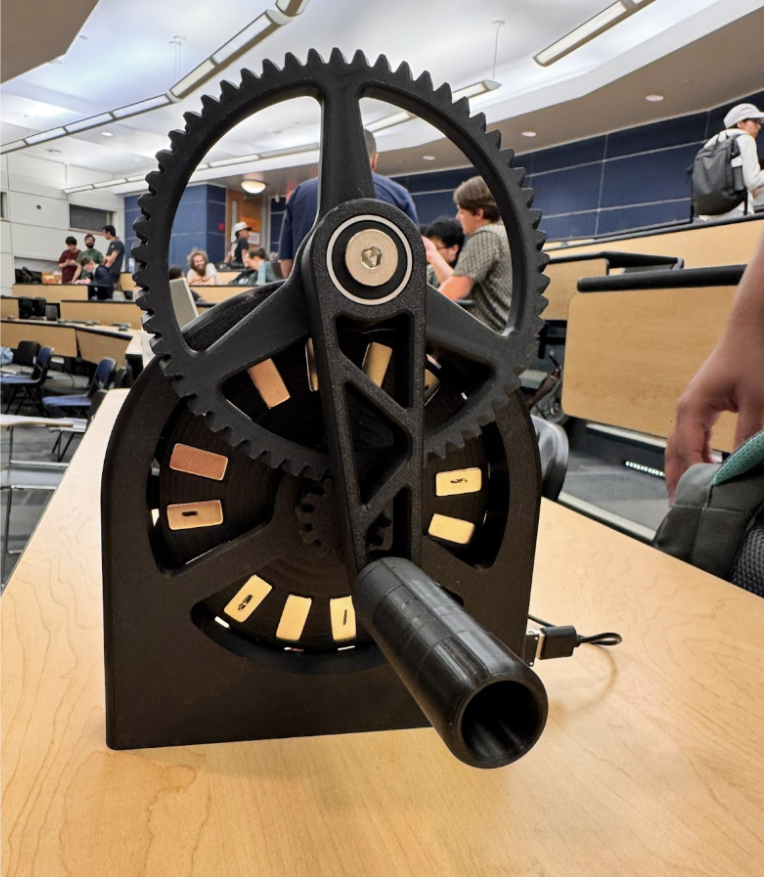
As part of our ongoing research into axial flux technology for renewable energy applications, we developed a compact hand-crank generator that showcases the principles of efficient energy harvesting from human motion. This prototype leverages a 3D-printed axial flux generator, designed for portability and real-world use, such as emergency charging or off-grid microgeneration.

The generator's stator consists of 8 individually wound copper coils, each using 0.4 mm diameter enameled wire with 320 turns per coil. These coils are connected in series to maximize voltage output.

Coils

Dual rotors are mounted on either side of the stator and each carries 16 neodymium N52 magnets (20 mm x 10 mm x 5 mm), arranged with alternating polarities to induce alternating current as they spin past the coils.

Magnets

The hand crank is connected to the rotor assembly via a 5:1 gear ratio, amplifying the rotation speed of the generator.

Theoretically, assuming a rotor speed of around 800 RPM and ideal flux change across all coils, the generator is capable of producing over 50–55V AC peak across the 8 coils in series.

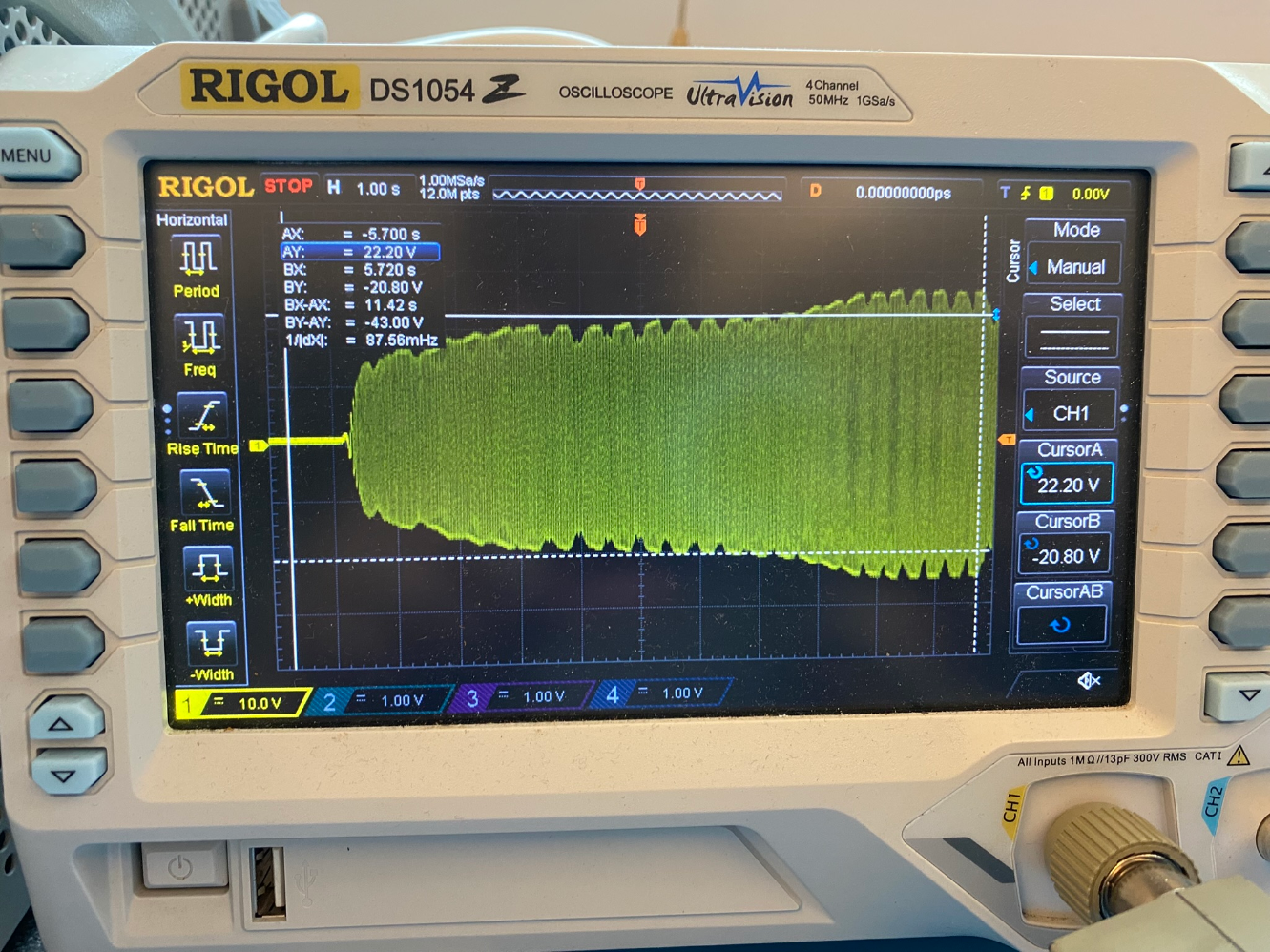
In practical testing, we observed a consistent output of approximately 43V AC under typical human crank torque (as seen in the oscilloscope capture below). The generated AC power is rectified using a full-wave bridge rectifier and filtered using three 1000 µF capacitors connected in parallel to smooth the ripple. This DC output is fed into a 6–32V to 5V DC step-down converter, making it suitable for charging mobile devices via USB.

Oscilloscope

The system successfully charged multiple phones in field tests, validating the effectiveness of the design.

Design improvements are planned for future iterations. To minimize eddy current losses and thermal inefficiency, we are exploring the use of laminated or composite stator materials instead of solid plastic. Additionally, refining the magnet placement with optimized Halbach arrays could enhance flux density and reduce magnetic leakage.

Other test results showed that under sustained cranking at moderate speed, the system could deliver a steady 8–10W output—enough to support LED lighting or small IoT devices alongside mobile charging.

This project not only demonstrates the viability of axial flux generators in human-powered systems but also highlights scalable solutions for decentralized, clean energy generation in remote or emergency settings. We will be showcasing the device in our hardware project demo.

Contact Us

Key Contributors: Riyansh Shah, Aadit Gupta (UVIC ECE)

Contact Riyansh Contact Aadit